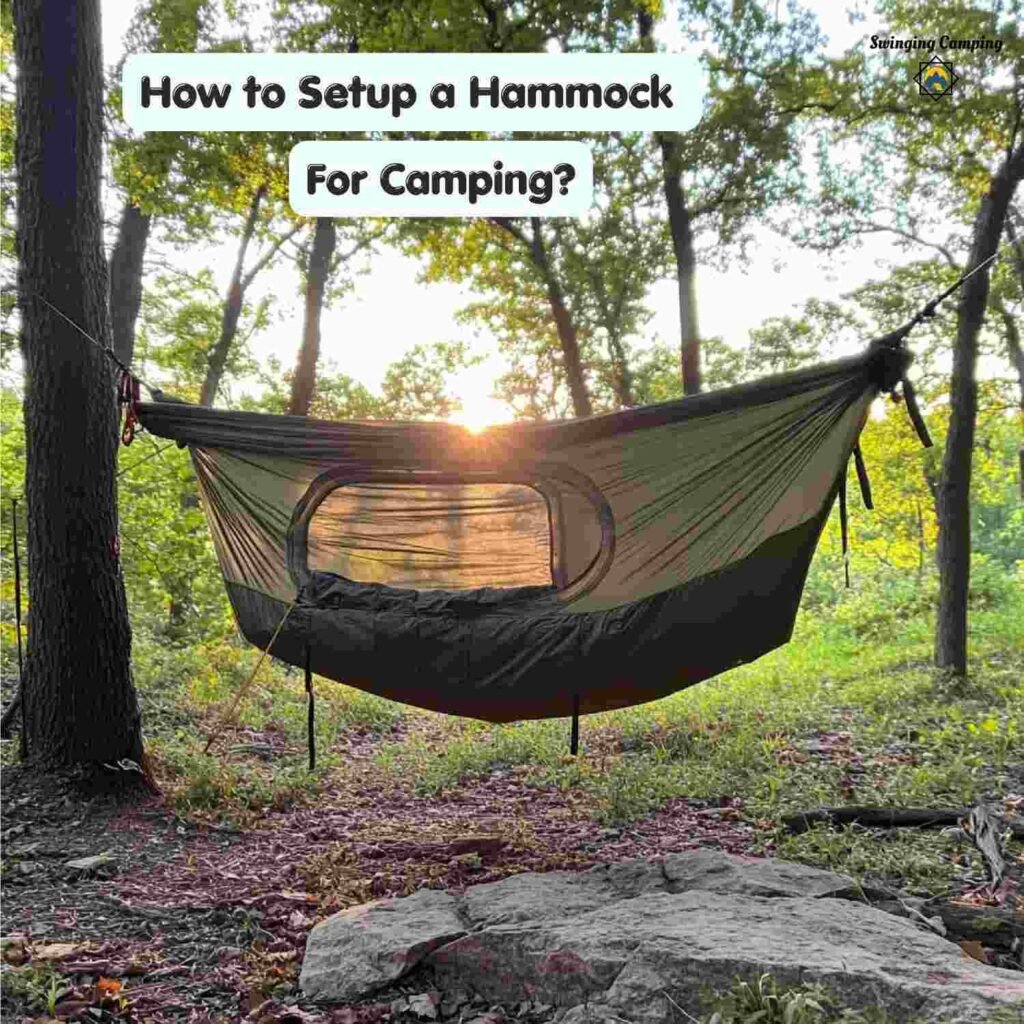
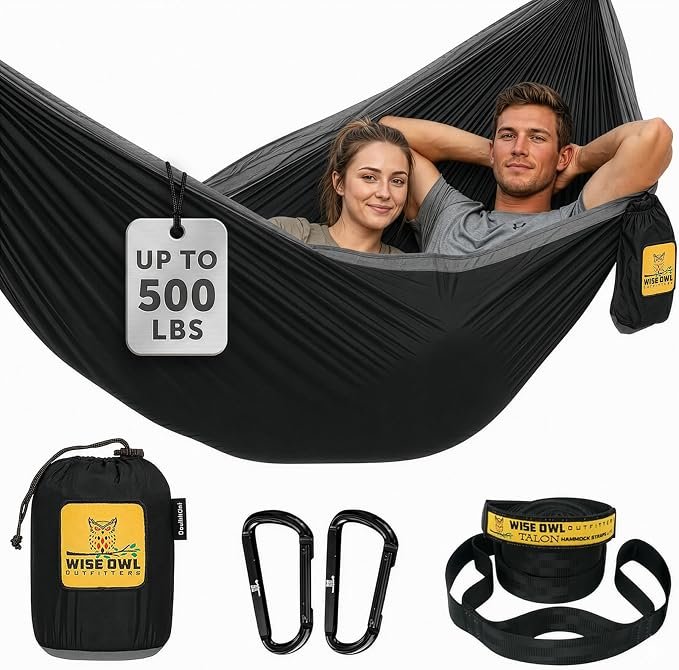
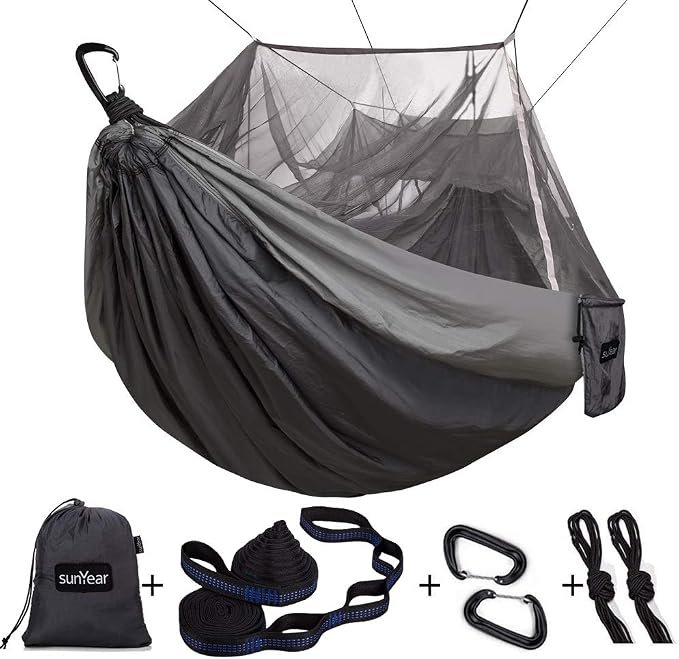
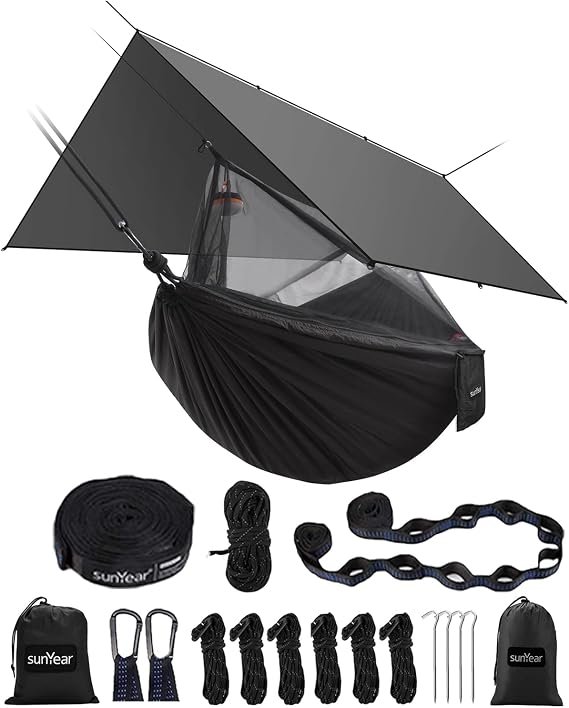
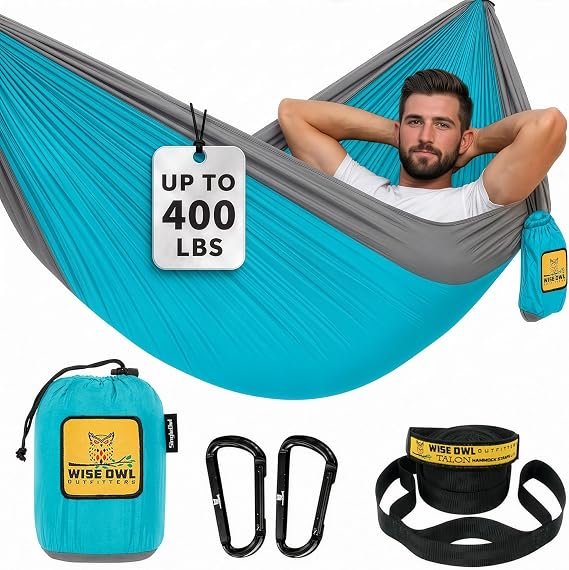
In this guide from Swinging Camping , we’ll answer the question “how to set up a hammock for camping?” and cover the essential gear and steps you need to create a comfortable and secure hammock setup.
Once you know the basics, setting up a camping hammock is quick and straightforward. It may take a little practice to get familiar with the ropes and suspension system, but with the right technique, you can confidently set up your hammock in a variety of outdoor locations.
Table of Contents
How is a Camping Hammock Set-up? Complete Guide and Common Mistakes to Avoid
The freedom hammock camping set-up offers to your trips is one of the reasons we adore it. As long as you have two anchor points, you can set up almost anywhere.
However, as with any trip, it’s crucial to be ready. To ensure that the area is appropriate for hammock camping, we advise conducting some research. It’s time to set out on your journey once you’ve prepared your hammock and packed your camping supplies.
Detailed instructions on “how to set up a hammock for camping”?
The best camping hammocks balance pack size, weight capacity, and durability; before making a purchase, always verify the weight rating and suggested hanging distance.
To set-up a camping hammock, follow these crucial steps:
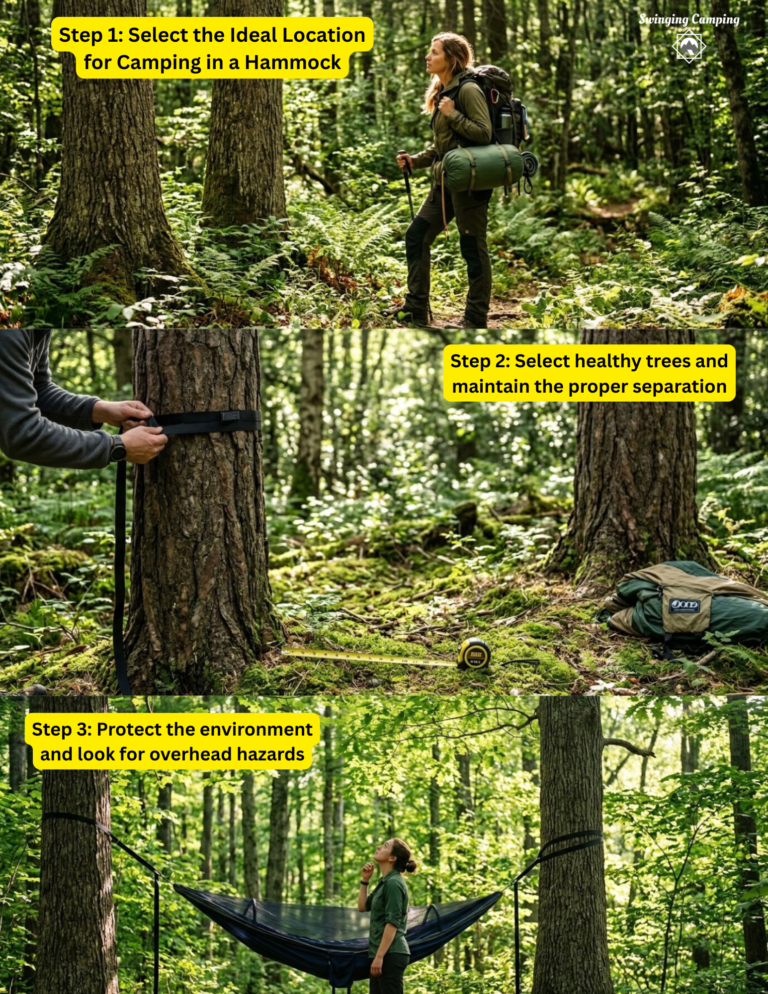
Step 1: Select the Ideal Location for Camping in a Hammock
One of the most crucial aspects in erecting an outdoor hammock camping is choosing the ideal spot. Strong trees, ample room for your hammock, and no visible dangers above are all indicators of a suitable location.
You may improve the safety and comfort of your hammock camping setup by taking a few minutes to survey your surroundings. This entails asking land management if hammocks are permitted and, if so, what the rules are.
Step 2: Select healthy trees and maintain the proper separation
Choose two mature, healthy trees that can sustain your weight and are at least 6 inches in diameter. Steer clear of trees that are bending, dead, or broken because they might not offer a sturdy anchor for your hammock.
Choose trees that are at least 60–80 cm longer than the length of your hammock, or that are roughly 10 to 15 feet apart. This gap allows your camping hammock to droop comfortably without putting undue strain on the suspension system. You can have trouble setting up the ideal hammock if the trees are too near or too far apart.
Step 3: Protect the environment and look for overhead hazards
Before you hang your camping hammock, check closely at the area above you. Watch out for dead branches, loose limbs (also known as widow-makers), and active animal nests.
When hammock camping, follow the Leave No Trace ethic and make use of existing campsites if possible. Set up at least 200 feet away from lakes, streams, and other water sources to protect the environment. Additionally, utilising tree-friendly hammock straps can help prevent unnecessary bark damage.
Step 4:Attach the hammock between two trees
Attach the hammock’s ends to the corresponding tree strap using a certified carabiner. Most modern camping hammocks connect using a simple loop-and-clip technique that takes only a few seconds.
At this point, the camping hammock should hang quite high at the ends and naturally droop in the centre. Do not attempt to make it completely flat. Generally speaking, a slight banana-shaped curvature keeps your body safe and is more comfortable.
Step 5: Modify the angle and height of the hammock
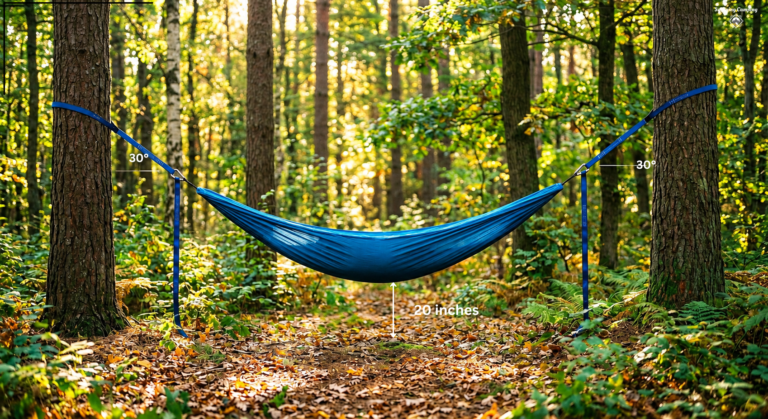
A 30-degree hang angle from horizontal is the golden rule for conventional hammocks for camping. This position avoids unpleasant shoulder pinch and produces the perfect amount of droop for comfort.
Make sure the bottom of the empty hammock is between 18 and 24 inches above the ground by adjusting the straps. The fabric will stretch somewhat as you sit in it, but your feet should still be able to touch the floor comfortably.
Step 6: Set Up a Ridgeline for Your Tarp or Bug Net
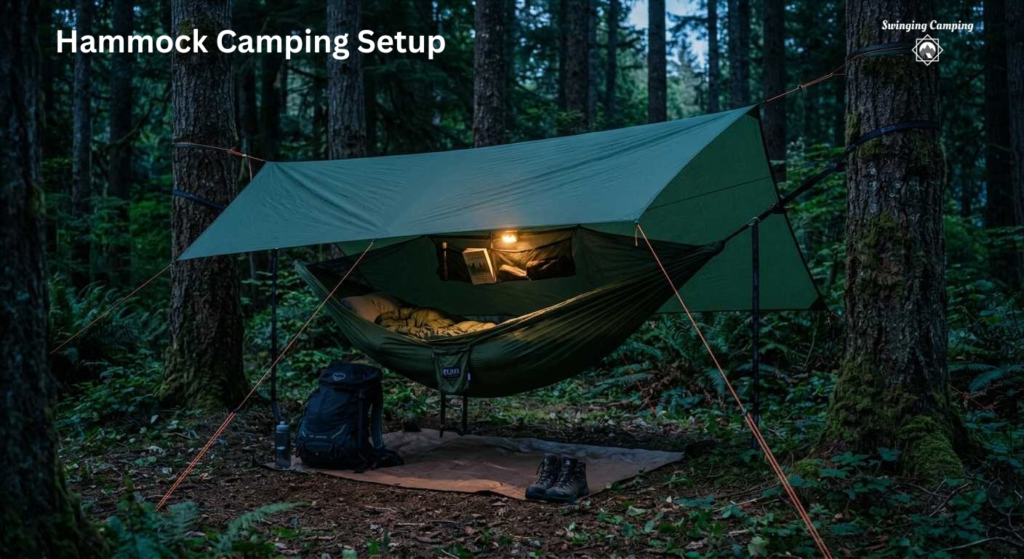
If you’re using a tarp or bug net while hammock camping, install a ridgeline between the two anchor trees above your hammock. Keep the ridgeline approximately 20–30 cm above the suspension straps to provide enough room to move comfortably underneath your tarp or bug net.
Step 7: Make Your Hammock Comfortable
Once your camping hammock is securely set up, it’s time to prepare it for relaxation or sleep. Depending on your hammock camping gear, attach an under quilt underneath the hammock and add a sleeping pad, top quilt, or sleeping bag inside. Adjust everything so you have enough insulation and a comfortable sleeping position
Step 8: Add the final details.
Make any last hammock setup changes, such as placing a groundsheet or gear loft underneath you. When using a groundsheet in rainy weather, make sure the tarp above you completely covers it to prevent water buildup on its surface.
Step 9: Don’t leave any evidence.
As usual, it is your duty to protect the natural surroundings you are enjoying. Use tree-friendly suspension straps to lessen your effect, and when you’re done, leave everything just as you found it.
Step 10: Dry, clean, and store your equipment
Clean your hammock camping equipment after each excursion and let it dry completely before putting it away in a cool, dry location out of the sun.
Is hammock camping a good idea?
Tents aren’t as versatile as camping hammocks. Depending on the season, I normally like to stop walking between 3:00 and 4:30 p.m., but on a few occasions, I’ve had to continue travelling much past that time because I couldn’t find a decent spot to set up a tent.
There would have been plenty of opportunities to pause at my preferred time if I had been utilising a hammock on several occasions. The ability to camp on slopes and other locations where tents wouldn’t work is arguably the greatest benefit of hammock camping.
How to take a nap on a hammock?
Check for slippage by using both hands to firmly pull down on the hammock’s centre. Next, carefully take a seat with your feet on the floor and move your weight back and forth. The cloth underneath you will slightly smooth out, and you won’t feel as though the hammock is engulfing you if your body is canted 10 to 15 degrees from the centerline.
Keep in mind that the space beneath your camping hammock also serves as a tent’s vestibule, providing extra covered storage for heavier objects like your pack or boots.
Common Hammock Setup Mistakes and How to Avoid Them
One of the most common mistakes when setting up a hammock is pulling the hammock too tight in an attempt to make it completely flat. Although this may seem like the right approach, a hammock is designed to have a natural curve rather than a flat sleeping surface.
When the hammock is stretched too tightly, it will still sag in the middle once you get inside. At the same time, the sides can rise around your body and create a tight, cocoon-like feeling. This can restrict your ability to stretch out, change positions, or find a comfortable sleeping position.
An overly tight hammock can also place unnecessary pressure on the tree straps, suspension system, and anchor points. In some setups, excessive tension may increase the risk of damaging the supporting tree, porch, or other attachment point.
For a more comfortable and safer hammock camping setup, allow the hammock to maintain a gentle natural sag instead of trying to pull it completely flat. Adjust the suspension gradually until you find a comfortable position with adequate support and relaxed tension.
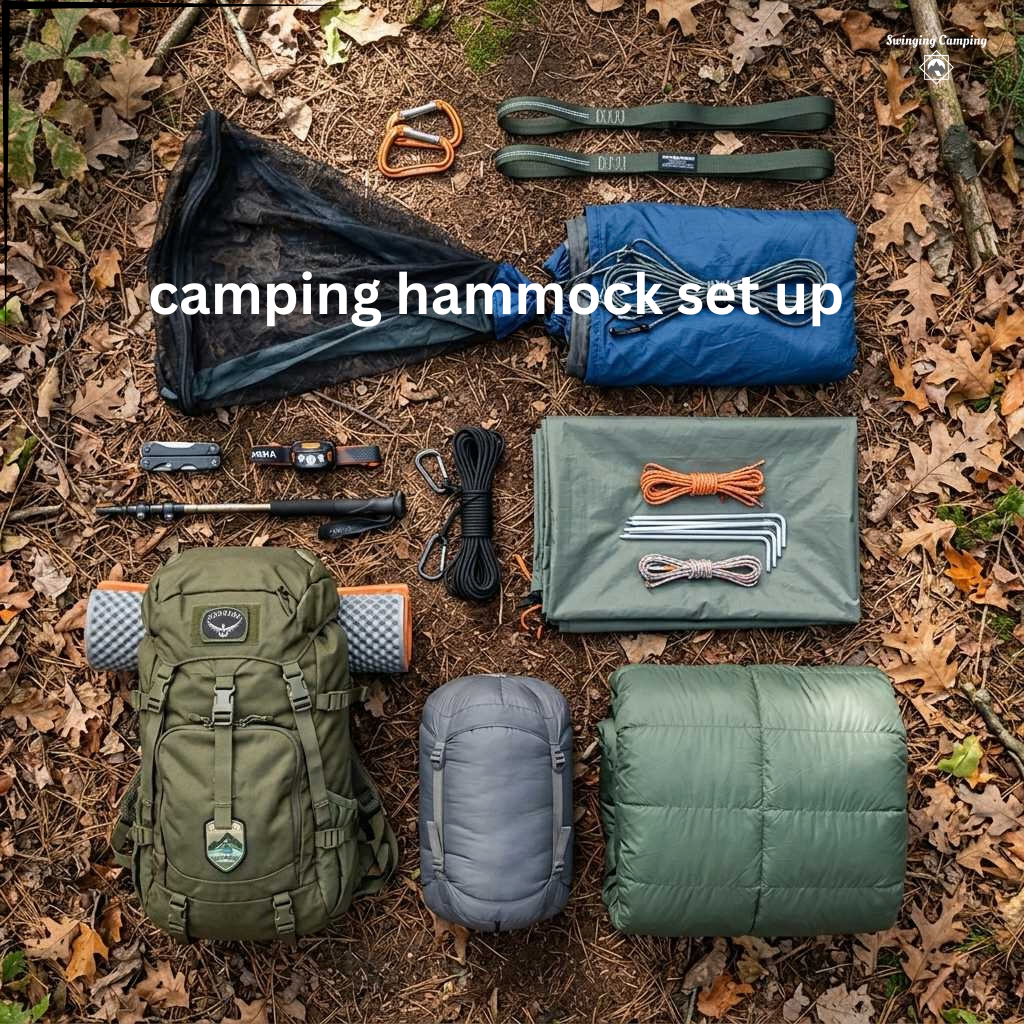
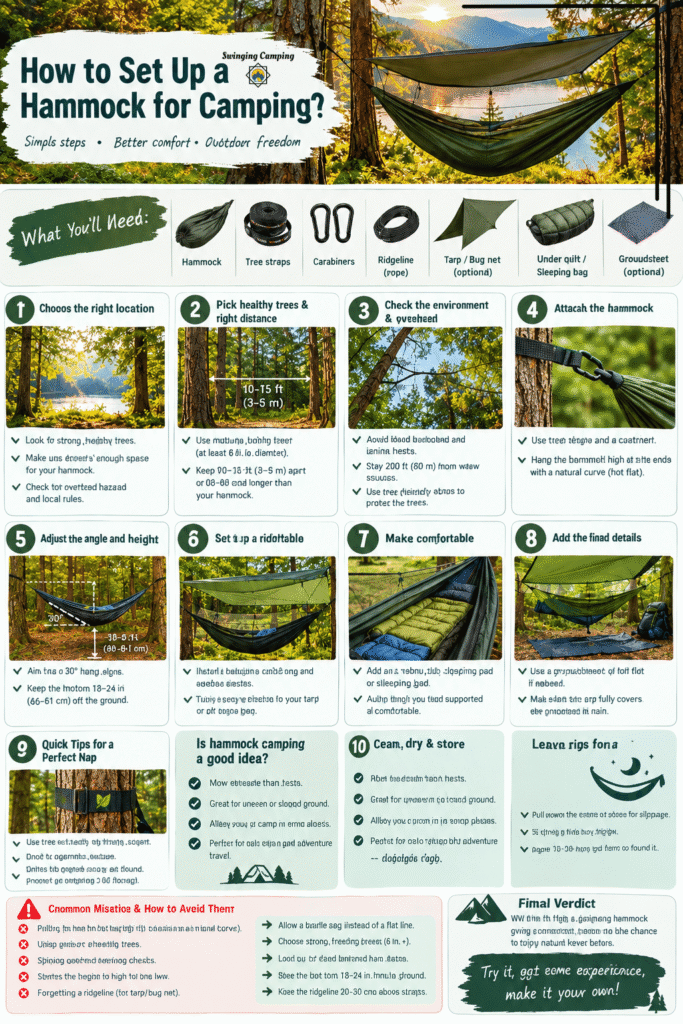
Infographic: Camping Hammock Setup
Conclusion: Hammock Camping Setup
You can maximize your comfort and simplify your hammock camping setup with the following pointers.However, it can take some experience to get a camping hammock put up correctly, just like anything new, but that’s all part of the pleasure.
Before you go on an overnight trek with your new hammock, we recommend taking a few test runs. Take a quick hike so you can pitch your hammock. Experiment, make changes, and record the setup that works best for you.
Best Camping Hammocks Compersion Table
|
|
|
|
| |
Star Rating | 4.9/5
| 4.63/5
| 4.45/5
| 3.57/5
| 4.66/5
|
Bottom Line | A versatile and durable hammock chair with a sturdy stand, perfect for both indoor and outdoor relaxation. | A robust and multi-functional hammock stand designed for various hammock styles. | A reliable and strong stand ideal for hanging hammocks in any setting. | A stylish and durable C-style stand, perfect for hammock chairs. | A heavy-duty stand with exceptional weight capacity for ultimate stability. |
Product | Hammock Chair with Stand,Heavy-Duty Hanging Chair with Stand | Heavy-Duty Steel 300LBS Multi-Use Hammock Stand for Outdoor Indoor | Heavy Duty Construction for Hanging Hammock, Hanging Stand | Heavy Duty & Powder Coated C Style Hammock Chair Stand | Heavy Duty Hammock Chair Stand,Weight Capacity 440 Lbs Hanging Chair Stand |
Size and Material | Made of heavy-duty steel with a weight capacity of 300 lbs; features a weather-resistant finish. | Constructed from powder-coated steel; supports up to 300 lbs. | Built with reinforced steel; accommodates up to 250 lbs. | Powder-coated steel frame; supports up to 330 lbs. | Made of reinforced steel; supports up to 440 lbs. |

Our Expert Team
Meet our team of outdoor enthusiasts and camping gear researchers! We explore, research, compare, and review outdoor products to help take the guesswork out of choosing the right camping gear. We focus on the important questions about quality, comfort, durability, usability, value, and real-world performance so you can spend less time researching and more time enjoying the outdoors. To learn more about our team and what we do, check out our About Us page.
Why You Should Trust Swinging Camping
At Swinging Camping, we’re passionate about creating better outdoor experiences. Our team carefully researches and tests camping gear to ensure it meets high standards for comfort, safety, and durability.
In addition, we focus on honest, unbiased insights so you can make confident buying decisions. We also value sustainability and aim to recommend products that respect the outdoors we all enjoy.
With years of experience and thousands of happy customers, we work hard to provide reliable advice every time you plan your next adventure.
FAQ About
The ideal setup for hammock camping combines an 11-to-12-foot gathered-end hammock, wide tree straps at a 30-degree angle, an underquilt for insulation, and a weather-protecting rain tarp.
Yes, hammocks are designed to have a gentle, rocking or swinging motion that helps promote relaxation and sleep.
Sleeping comfortably in a hammock while camping requires a 30-degree hang angle and sleeping diagonally to keep your body flat.
Why You Can Trust Our Reviews
Reviews for "Swinging Camping":

How to Hammock Camp With a Dog?
() Learn “How to Hammock Camp With a Dog?” With these simple tips from Swinging Camping. Discover how to prepare
How To Hang a Hammock Using Rope?
() Learn “How To Hang a Hammock Using Rope?” With this easy step-by-step guide from Swinging Camping. Discover how to
How To Tie a Hammock With Straps?
() Learn “How to Tie a Hammock With Straps?” With this simple guide from Swinging Camping. Discover how to choose

How Much Weight Can a Hammock Hold?
() Wondering “How Much Weight Can a Hammock Hold?” This guide from Swinging Camping explains hammock weight limits by style
How Do You Comfortably Camp in a Hammock?
() Learn “How Do You Comfortably Camp in a Hammock?” with this practical guide by Swinging Camping. Discover how to

How To Clean Hammock?
() Learn “How To Clean a Hammock?” with this complete step-by-step guide from Swinging Camping. Discover how to clean rope,
How useful was this post?
Click on a star to rate it!
Average rating / 5. Vote count:
No votes so far! Be the first to rate this post.