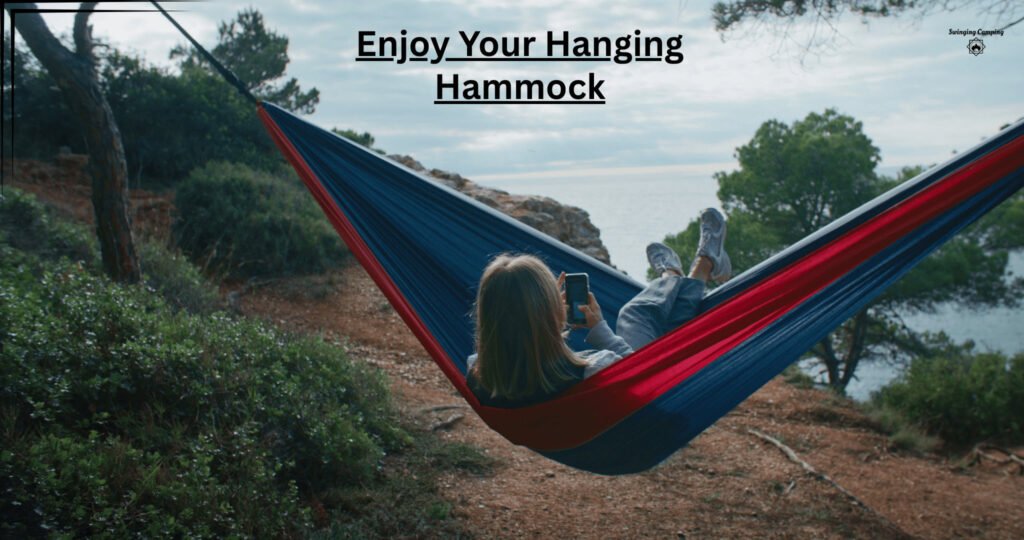
Learn “How to Tie a Hammock With Straps?” With this simple guide from Swinging Camping. Discover how to choose the right trees, secure hammock straps, and set the proper height and angle. Follow these easy steps to create a safe, comfortable, and tree-friendly hammock setup.
Table of Contents
Straps for hammocks: What they are and how to use them
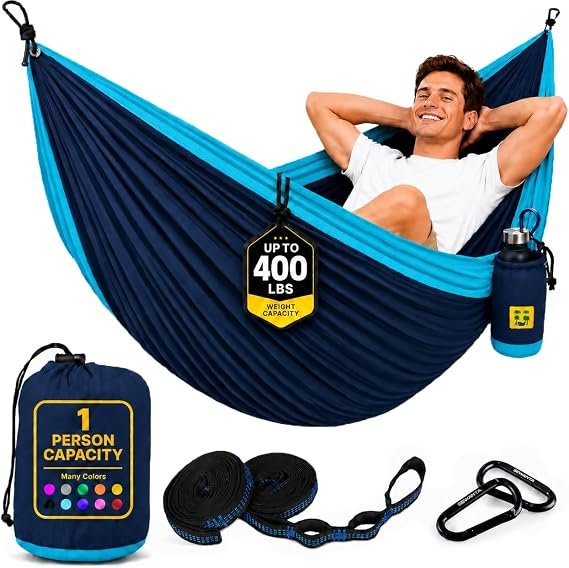
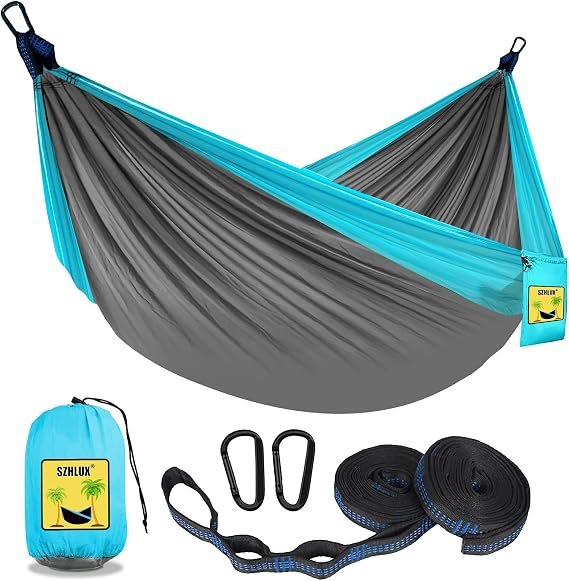
Straps specifically designed for the hanging of hammocks are called hammock straps.
These are typically made from a durable webbing that can be easily attached to two trees using carabiners or clips. There are both universal and model-specific versions available. Be sure to check which straps your hammock is compatible with before purchasing.
They’re durable, long enough to wrap around thick trees (extra-long options are also available), and they don’t damage trees. However, there are other ways to tie a hammock, such as rope-hanging instead of hammock straps.
Hanging a Hammock With Straps: An Easy Guide
It is essential to learn how to set up your hammock, regardless of whether you plan to just relax at home or go camping. The majority of hammocks come with simple instructions for setting them up. There are, however, some general guidelines to follow, including where to hang it.
Sinces require no ground hanging hammock preparation and little or no staking, they are considered to be low-impact shelters. Hammocks are eco-friendly when they are suspended from trees using tree-friendly suspension systems.
The following instructions explain how to hang a hammock using hammock straps.
Step 1: Choosing the Right Trees
A healthy tree is one that has no dead branches, is robust (it has a thick trunk), and does not harbor any creatures which you may disturb.
Step 2: Choosing the Right Hammock Straps
You should ensure that the hammocks straps you select are compatible with your camping hammock. Aside from their length and weight capacity, you should also consider how many adjustment points they have. To save weight, backpackers should use ultralight straps.
Step 3: Wrap the Strap Around the First Tree
Take one of your straps and wrap it around a tree. Your hammock should be high enough (about 18 inches off the ground) by wrapping your straps at a height of approximately five or six feet.
Step 4: Secure the Strap
Using the end with the attachment points, place the end with the anchor points through the loop on the opposite end (with the logo).
By pulling the end with the anchor points, the strap will be tightened around the tree. Straps need to be tight so they don’t slide down the tree. Depending on what you find, you may need to adjust the strap.
Step 5: Repeat on the Second Tree
Repeat steps 3-5 in order to hang the second strap. As soon as the straps are tightly tightened around the tree, hang the hammock.
Step 6: Attach the Hammock to the Straps
To attach the hammock to the second tree, simply clip the hammock’s carabiner to one of the many anchor points and pull the hammock toward the second tree.
Step 7: Check the Hammock Height and Angle
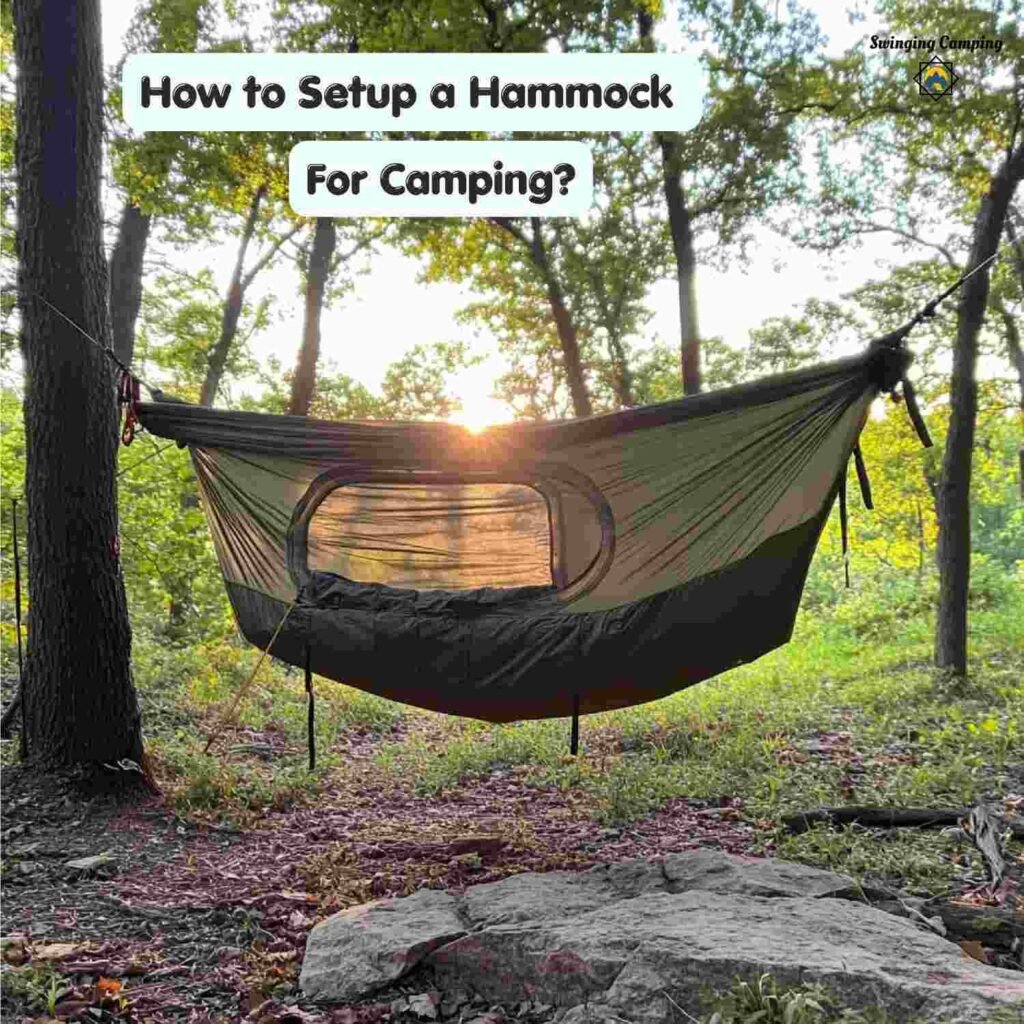
Your target should be an angle of about 30 degrees between the strap and the ground, with the bottom of the hanging hammock approximately 18 inches above the ground. This height and angle are considered ideal for comfortable hammock camping.
Step 8. Test the Hammock Before Use
All you have to do now is get in your hanging hammock and see how it feels.
For adjusting the tension and angle of your hammock, you may want to change what attachment points your hammock is connected to. As soon as you have adjusted the hammock to your satisfaction, it is time to relax. You can enjoy your hammock for a longer period of time by keeping hammock clean and well-maintained.
What to Look for in Hammock Straps and Trees?
Choose Healthy, Strong Trees
Choosing the wrong tree (or one of its limbs) may result in personal injury and damage to the ecosystem. Choose robust trees at least six inches in diameter.
Use Tree-Friendly Hammock Straps
Webbing straps (0.75″ or more) can protect a tree’s bark against abrasion compared to rope or cord. Zip cords and wire are thin and unforgiving, and planting trees with hammers and screws is not recommended.
Avoid Attaching Multiple Hammocks to One Tree
Each person uses a different tree for their hammocks. As a result, you will contribute to the reduction of strain on individual trees as well as dispersing your group’s impact.
How High and At What Angle Should You Hang a Hammock?
Use a 30-Degree Suspension Angle
The temptation is to pull the camping hammock tight in order to create a flatter sleeping platform, but that can result in tension in the sides, which can be uncomfortable.
Hang the hammock about 18 inches off the ground
It’s quite easy to get in and out of the hammock at that height (with you inside). Falling out of it is not likely to produce serious injuries. You can also check which hammock height or weight limit is best suited for you.
Lie diagonally
In this tip, we suggest you fix uncomfortably bowing your back. Lie diagonally by angling your body closer to the centerline after crawling in. This will help you sleep more comfortably in your hammock.
Infographic: Tie a Hammock With Straps
Conclusion: Tie a Hammock With Straps
Setting up a hammock with straps does not have to be complicated. With the right trees, durable straps, proper height, and a comfortable suspension angle, you can create a secure place to relax or sleep outdoors. Take a few moments to check your setup before getting in, and you’ll be ready to enjoy your hammock with confidence.
Best Hammocks Comparison Table
|
|
|
|
| |
Product | |||||
Star Rating | 4.9/5
| 4.63/5
| 4.45/5
| 3.57/5
| 4.66/5
|
Bottom Line | A durable, lightweight 2-person hammock with 500-lb capacity and adjustable tree straps, ideal for camping and travel. | A durable, easy-to-set-up hammock with single and double sizes, perfect for camping and travel. | A durable, lightweight 2-person hammock with adjustable tree straps, perfect for camping and outdoor relaxation. | A lightweight, durable double hammock with 500-lb capacity, perfect for camping and outdoor relaxation. | A lightweight, durable nylon hammock with a built-in bug net and adjustable straps, perfect for camping, hiking, and relaxing outdoors. |
Material | Medium | Nylon | Medium | Nylon | Nylon |
Product Dimensions | 106.3"L x 55.1"W | 10"L x 15"W | 106"L x 55"W | 120"L x 78"W | 106"L x 55"W |
Maximum Weight Recommendation | 500 pounds | 400 pounds | 500 pounds | 400 pounds | 500 pounds |
Color | Black & Grey | Blue & Light Blue | Light Grey & Sky Blue | Fuchsia & Sky Blue | A Green/Khahi |

Our Expert Team
Meet our team of outdoor enthusiasts and camping gear researchers! We explore, research, compare, and review outdoor products to help take the guesswork out of choosing the right camping gear. We focus on the important questions about quality, comfort, durability, usability, value, and real-world performance so you can spend less time researching and more time enjoying the outdoors. To learn more about our team and what we do, check out our About Us page.
Why You Should Trust Swinging Camping
At Swinging Camping, we’re passionate about creating better outdoor experiences. Our team carefully researches and tests camping gear to ensure it meets high standards for comfort, safety, and durability.
In addition, we focus on honest, unbiased insights so you can make confident buying decisions. We also value sustainability and aim to recommend products that respect the outdoors we all enjoy.
With years of experience and thousands of happy customers, we work hard to provide reliable advice every time you plan your next adventure.
FAQ About
To tie a hammock with ropes or webbing instead of pre-loop straps, use reliable, strong knots like the Bowline or Two Half Hitches
You can use 1-inch tubular or flat polyester webbing, car tie-down straps (with the metal hooks cut off), or static climbing rope / climbing slings as safe alternatives to official hammock straps
You can hang a hammock without a carabiner by using strong webbing or rope tied directly to the tree and the hammock end loop with a secure knot like the Becket hitch or a sheet bend
The best and safest knots to hang a hammock are the Bowline for a secure, non-slip fixed loop and the Taut-Line Hitch or Becket Hitch for adjustable tension.
The best hammock straps balance weight, length, and tree-friendly width, with top overall picks like the
leading the market.
The correct way to hang a hammock is to set the anchor points 10 to 17 feet apart, mount the straps at roughly head height, and aim for a 30-degree suspension angle so the lowest point of the occupied hammock sits about 18 inches off the ground
Why You Can Trust Our Reviews
Reviews for "Swinging Camping":

How to Hammock Camp With a Dog?
() Learn “How to Hammock Camp With a Dog?” With these simple tips from Swinging Camping. Discover how to prepare
How To Hang a Hammock Using Rope?
() Learn “How To Hang a Hammock Using Rope?” With this easy step-by-step guide from Swinging Camping. Discover how to
How To Tie a Hammock With Straps?
() Learn “How to Tie a Hammock With Straps?” With this simple guide from Swinging Camping. Discover how to choose

How Much Weight Can a Hammock Hold?
() Wondering “How Much Weight Can a Hammock Hold?” This guide from Swinging Camping explains hammock weight limits by style
How Do You Comfortably Camp in a Hammock?
() Learn “How Do You Comfortably Camp in a Hammock?” with this practical guide by Swinging Camping. Discover how to

How To Clean Hammock?
() Learn “How To Clean a Hammock?” with this complete step-by-step guide from Swinging Camping. Discover how to clean rope,
How useful was this post?
Click on a star to rate it!
Average rating / 5. Vote count:
No votes so far! Be the first to rate this post.