




Want to learn “How To Make a Tire Swing?” This practical guide from Swinging Camping explains two reliable methods for hanging a tire using strong rope, with or without bolts. Learn how to choose a suitable tree, prepare the tire, secure the ropes and knots, and check the swing for safety. Perfect for camping, web swinging, outdoor play, backyard projects, and fun summer adventures.
Table of Contents
Build a DIY Tire Swing: Utilising two distinct techniques
Sometimes the most delightful summertime experiences come from the simplest things. Upcycling an old tire into a unique tire swing can provide fast outdoor enjoyment, negating the need for pricey, custom-built play structures.
Continue reading to discover “how to tie a tire swing?” utilizing two distinct approaches, including the simple, traditional method of swinging from a tree by Swinging Camping
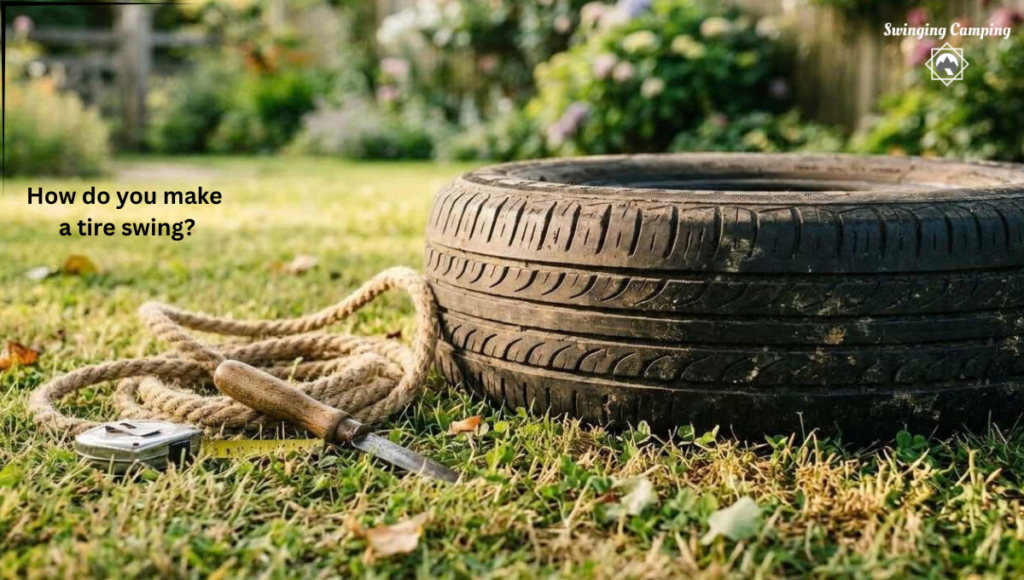
How do you make a tire swing?
A basic tire with a rope would appear to be a good tire swing at first glance. It worked for us as kids, after all. However, it is no longer sufficient to tie a rope to a tire. Tires are now installed horizontally rather than vertically for purchased play sets, which creates a whole new set of difficulties
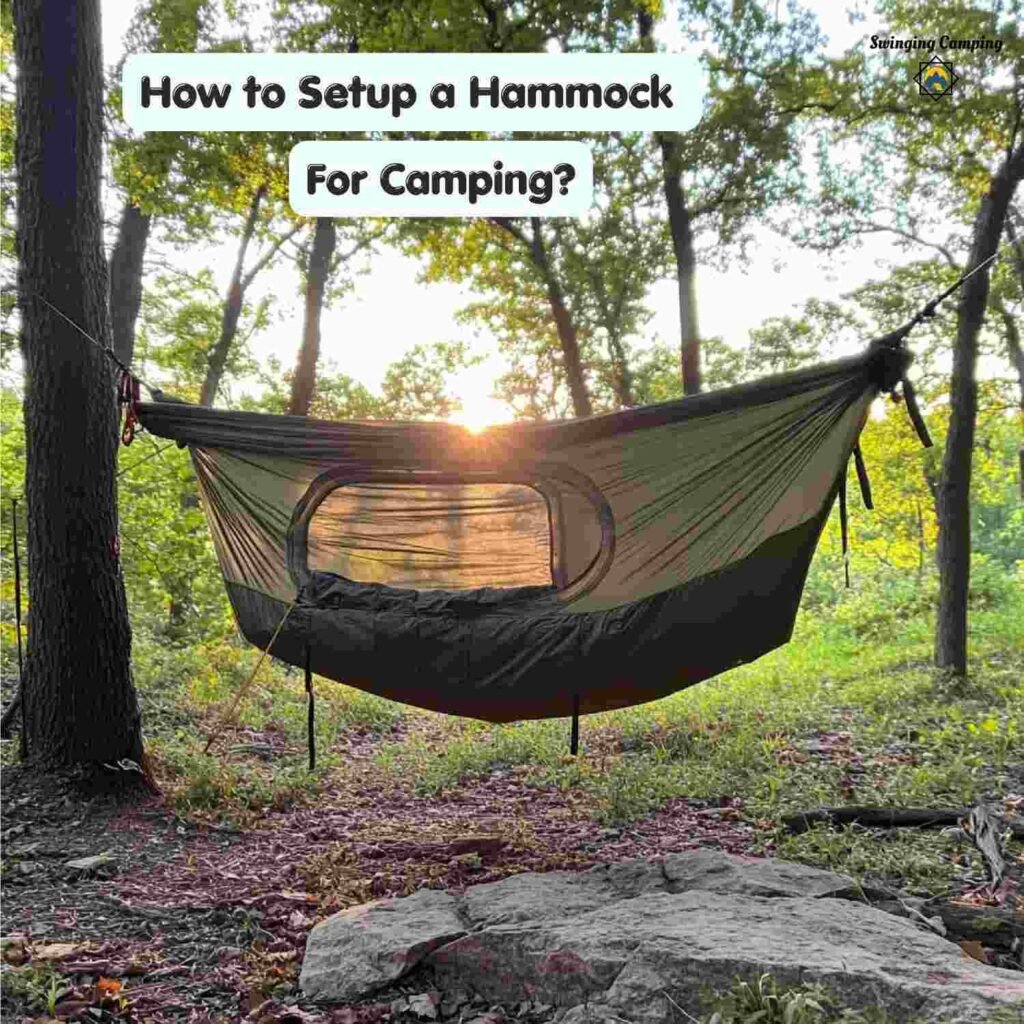
If you are a camping enthusiast, you’ll love learning how to hang as well as how to setup a hammock using both straps and ropes.
Comprehensive, step-by-step instructions on “How to tie a tire swing?”
Beginners will find this project ideal because all you need is a tree (a huge tree), a few tools, and a rudimentary understanding of knots.
Choose a Strong, Suitable Tree
If you’re trying to figure out “How to create a swing out of a tire?”, you probably already have a tree in mind. Just make sure the limb supporting the tire swing is large, sturdy, and at least 8 inches thick. A tree is unsuitable for a tire swing if it exhibits deterioration, splits, or dead branches.
Making sure there is adequate space between the tire’s hanging location and both the ground and the tree’s trunk is another factor to take into account. Then clear the space underneath the swing of any big pebbles or other trip hazards.
Choose the Correct Tire Size
For a tire swing, any standard-size passenger car rubber tire will do, though you can use a larger or smaller tire as long as you consider the weight of your particular project. If you come across an old tire, make sure there is still some tread on it to keep any wires from poking or scratching swing riders.
Clean and prepare the tire
Use a pressure washer to clean the tire thoroughly. Take the tire to the car wash and use one of the high-pressure hoses there to clean it if you don’t have the proper equipment
Method 1: How to Build a Tire Swing Without Bolts
This approach is straightforward, inexpensive, and simple to use if you want to construct a tire swing without bolts. You may build a secure swing out of simple materials using a good tire, a sturdy rope, and an appropriate tree.
Step 1: Make Water Drainage Holes
When you’re ready, that is, when you’re happy with how clean the tire is. Examine both sides of the tire after it has been cleaned to see which side is more attractive. This is going to be the upper side.
To stop water from collecting when it rains, drill holes in the tire’s bottom. Any standing water should be kept out of the reach of mosquitoes! That being said, every time you or your children utilize the tire swing, you should inspect it for insect pests like wasps and bees.
Step 2: Select a Heavy-Duty Rope for the Tire Swing
Find out how much weight your tire swing can support. This covers both the weight of the tire you select and the weight of the children (or adults) who will use it. Next, choose an outside braided heavy-duty rope rated for three times that weight.
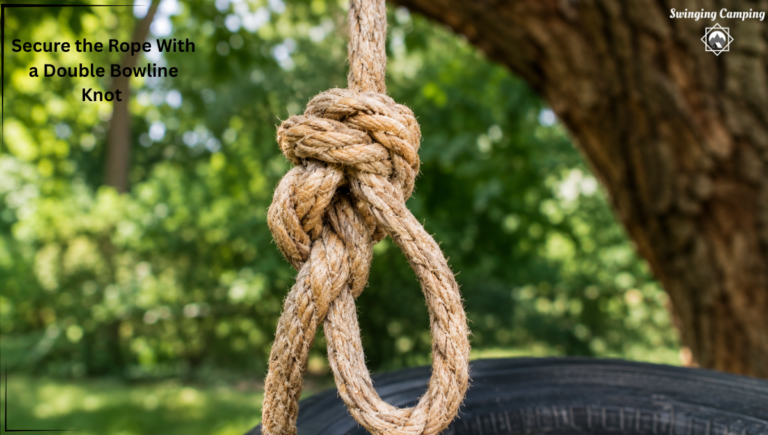
Step 3: Secure the Rope With a Double Bowline Knot
Cut a length of rope that is long enough for the connection, leaving a few extra inches for tying and adjustments. If needed, carefully melt the rope ends to help prevent fraying.
Tie a double bowline knot at one end of the rope, making sure the loop is large enough for the intended connection. Keep a little extra slack while tying so you can adjust the knot and tighten it securely afterward.
Step 4: Fasten the Rope to the Tree
Over the tree branch, toss the rope’s knot end. Put a softball inside a sock, tie the sock to the rope’s knot end, and hurl the ball over the branch if you need a little assistance. Pull the rope tightly after threading the other end through the bowline knot’s loop. The knot will eventually reach the branch after moving upward.
Step 5: Hang the Tire Securely
Position the tire at the desired height above the ground, then wrap the rope around the top of the tire. Tie a double bowline knot to secure the rope firmly in place. Check that the tire hangs level and that the knot is tight before using the tire swing.
Step 6: Make a Safety Check
To make sure the tire swing is strong, have the heaviest member of your family test it. You might not want to explain to this person why they were selected.
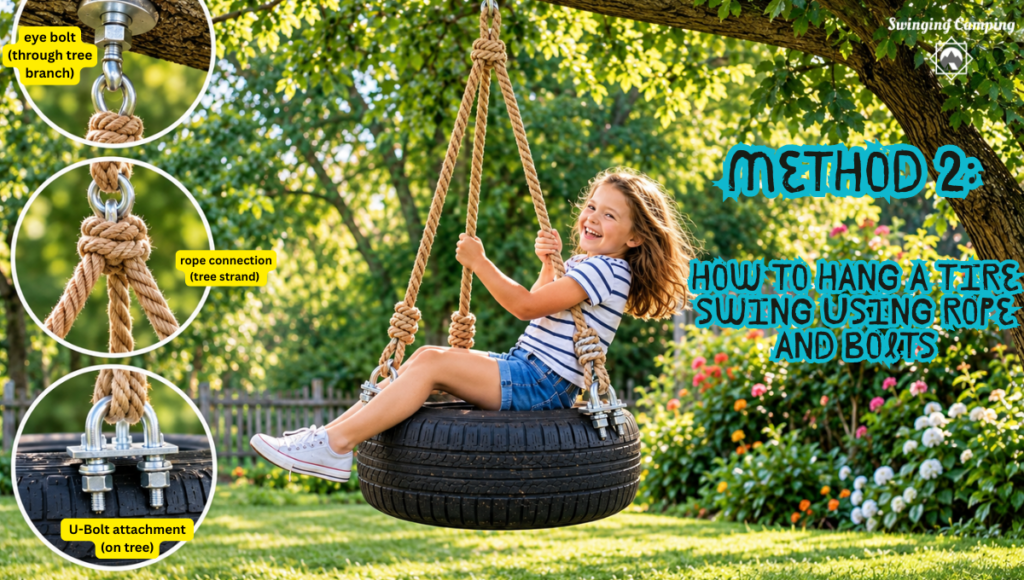
Method 2: How to Hang a Tire Swing Using Rope and Bolts
The tire swing can be fastened to a strong tree branch more securely by using bolts. Although it requires a little more effort, this technique produces a robust and dependable connection for your tire swing.
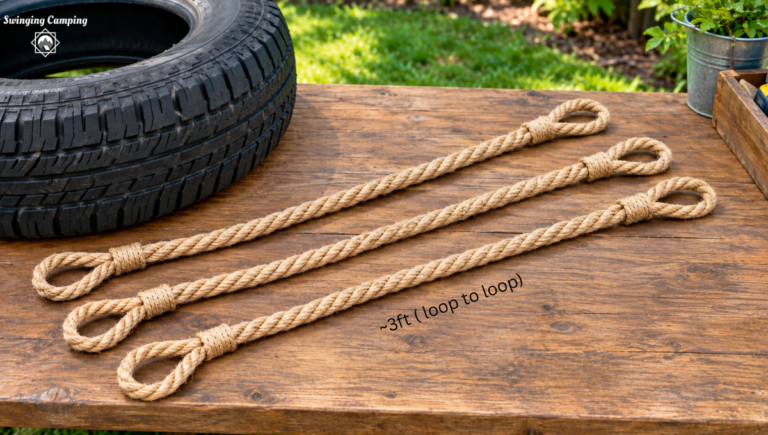
Step 1: Prepare Three Ropes with Loops at Both Ends
Three rope lengths that are three feet long from loop to loop are the target here.
Cutting roughly five feet of rope and tying loop knots at each end is the simple method. To avoid fraying, adjust one of the knots until it measures three feet from end to end, remove the excess, and melt the rope end with a lighter. A perfection loop or poacher’s knot is nearly as quick and has a slightly cleaner appearance, but an overhand loop knot is incredibly simple and absolutely sufficient.
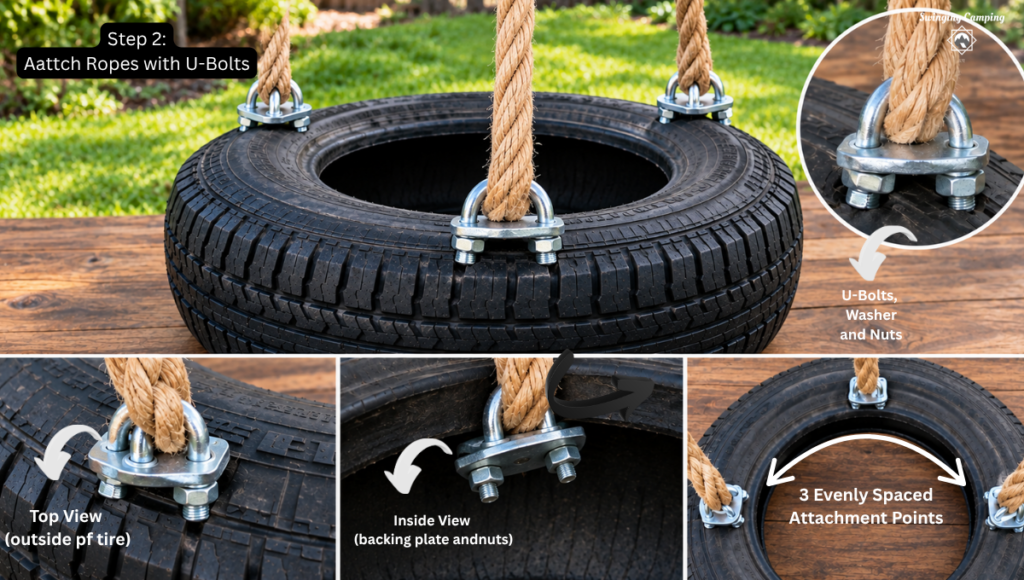
Step 2:Attach the ropes to the tire using U-bolts
First, drill or poke two holes close to the tire’s top. Pass the U-bolt through the holes after looping the rope through it. Tighten everything firmly after securing it from within the tire using a plate, nuts, and lock nuts. To maintain the swing secure and balanced, repeat the procedure with the remaining ropes, making sure they are evenly placed around the tire.
Step 3: Fasten an Eye Bolt to a Long Rope
One end of a rope should be looped to the eye bolt (knot or splice). In order to tie a decent knot, the rope must be at least a few feet long to extend from the tree branch to the tire. Use the remaining rope; you can cut it to length at a later time.
Step 4: Attach and Install the Eye Bolt
Start by feeding one end of the rope through the eye bolt, then secure it with a strong knot or rope splice. Leave a few extra feet of rope so you have enough length for tying, adjusting, and connecting the swing to the tire.
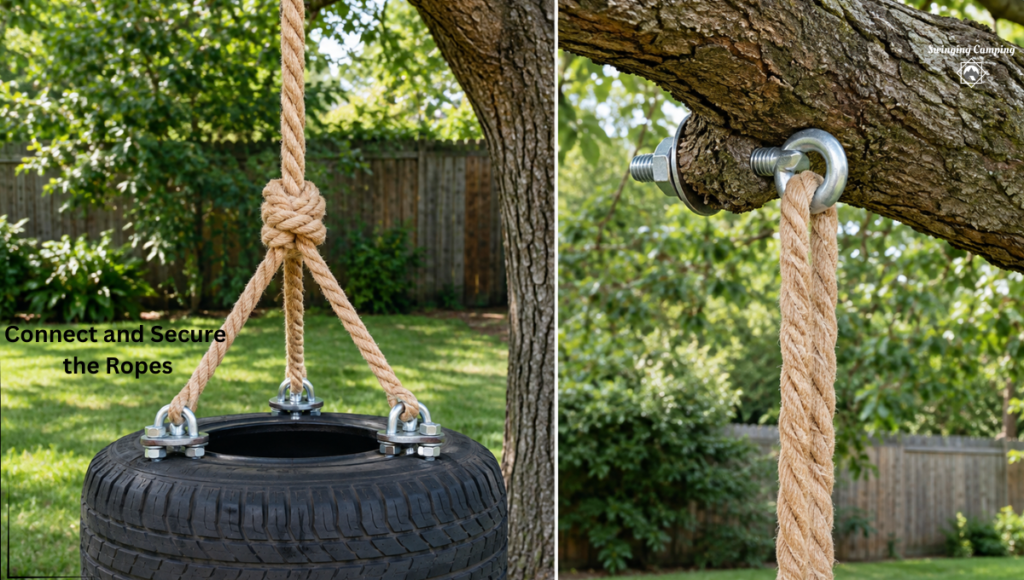
Next, choose a strong, healthy branch and drill a hole completely through it using a long drill bit. Place a washer on the eye bolt, push the bolt through the drilled hole, and secure it from the other side with the appropriate washers and nuts.
Tighten everything firmly, but avoid over-tightening so the tree has enough room to naturally expand as it grows. For a quieter setup, you can place a small piece of leather or folded denim between the rope and the eye bolt to reduce rubbing and noise, especially when the rope gets wet.
Step 5: Connect and Secure the Ropes
Take the loose end of the long rope and loop it through each of the three ropes that are already attached to the tire. In other words, pass the long rope through the three tire ropes one at a time, creating a secure connection between them.
Once the long rope has been threaded through all three ropes, tie a knot to hold everything in place. We used a hangman’s knot because it looks neat and gives kids a comfortable grip.
You may need to untie and retie the knot a few times to adjust the tension and get the swing positioned at the proper height.
Step 6: Take Pleasure in Your New Tyre Swing
After four years of enjoyment, this tire swing is still going strong. It’s frequently covered in snow, sweltering in 100 degrees, or accommodating five bouncing children at once. Our lawn has a bald area that is evidence of countless hours spent playing.
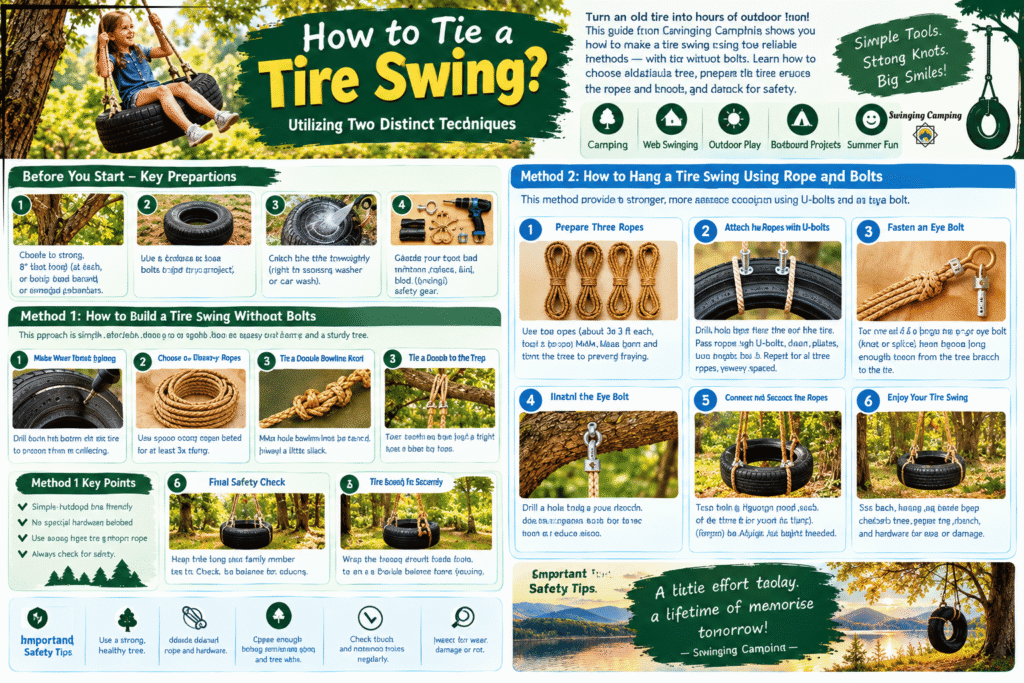
Infographic: Tie a Tire Swing
Conclusion: How to tie a tire swing?
Learning how to make a tire swing is a simple DIY project that can turn an old tire into hours of outdoor fun. This guide covered two methods: a rope-only tire swing without bolts and a bolt-supported method for a more secure attachment.
Whichever method you choose, always use a strong, healthy tree, durable rope, suitable hardware, and a clean tire. Check every knot and connection, ensure the swing has enough clearance, and thoroughly test it before use. Regularly inspect the rope, tire, tree branch, and hardware for wear or damage.
With careful preparation and proper safety checks, you can create a fun DIY tire swing for your backyard, campsite, or outdoor play area.
Our Expert Team
Meet our team of outdoor enthusiasts and camping gear researchers! We explore, research, compare, and review outdoor products to help take the guesswork out of choosing the right camping gear. We focus on the important questions about quality, comfort, durability, usability, value, and real-world performance so you can spend less time researching and more time enjoying the outdoors. To learn more about our team and what we do, check out our About Us page.
Why you should trust Swinging Camping?
At Swinging Camping, we’re passionate about creating better outdoor experiences. Our team carefully researches and tests camping gear to ensure it meets high standards for comfort, safety, and durability.
In addition, we focus on honest, unbiased insights so you can make confident buying decisions. We also value sustainability and aim to recommend products that respect the outdoors we all enjoy.
With years of experience and thousands of happy customers, we work hard to provide reliable advice every time you plan your next adventure.
FAQ About
No, wetting a rope does not make it stronger; in fact, water usually decreases a rope's overall strength and performance
HMPE (High-Modulus Polyethylene) rope, such as Dyneema, holds the most weight among all commercial synthetic ropes and is stronger than steel by weigh
Solid-braid or twisted polyester rope (5/8-inch to 3/4-inch thick) is the best choice for a tire swing because it resists sunlight damage, stays strong when wet, and does not stretch much.
A tire swing can be safe, but only if you use proper hardware, choose a lightweight modern or manufactured seat, and maintain a clear safety zone.
The recommended total length of rope for a tire swing is 15 to 25 feet if you are hanging a single-point 3-rope suspension from a high branch, or about 8 feet per section if cutting individual support ropes.
Braided rope is generally stronger than twisted rope of the same diameter and material
Why You Can Trust Our Reviews
Reviews for "Swinging Camping":

How to Hammock Camp With a Dog?
() Learn “How to Hammock Camp With a Dog?” With these simple tips from Swinging Camping. Discover how to prepare

How To Hang a Hammock Using Rope?
() Learn “How To Hang a Hammock Using Rope?” With this easy step-by-step guide from Swinging Camping. Discover how to

How To Tie a Hammock With Straps?
() Learn “How to Tie a Hammock With Straps?” With this simple guide from Swinging Camping. Discover how to choose

How Much Weight Can a Hammock Hold?
() Wondering “How Much Weight Can a Hammock Hold?” This guide from Swinging Camping explains hammock weight limits by style

How Do You Comfortably Camp in a Hammock?
() Learn “How Do You Comfortably Camp in a Hammock?” with this practical guide by Swinging Camping. Discover how to

How To Clean Hammock?
() Learn “How To Clean a Hammock?” with this complete step-by-step guide from Swinging Camping. Discover how to clean rope,
Lorem ipsum dolor sit amet, consectetur adipiscing elit. Ut elit tellus, luctus nec ullamcorper mattis, pulvinar dapibus leo.
How useful was this post?
Click on a star to rate it!
Average rating / 5. Vote count:
No votes so far! Be the first to rate this post.