
Learn “How To Clean a Hammock?” with this complete step-by-step guide from Swinging Camping. Discover how to clean rope, fabric, and camping hammocks safely. Get practical tips for washing, drying, seasonal maintenance, and proper storage. Keep your hammock clean, comfortable, and ready for your next outdoor adventure.
Table of Contents
How to Care for Your Hammock: Cleaning, Protection, and Storage Guide
Hammocks are more than just outdoor furniture-they provide a gateway to relaxation. To ensure comfort and durability, keep your hammock clean and well-maintained whether you use it to soak up the summer sun, relax in the backyard, or unwind after a long day.
Throughout this guide, we will discuss how to maintain your hammock, including cleaning, protecting, and storing it when it is not in use
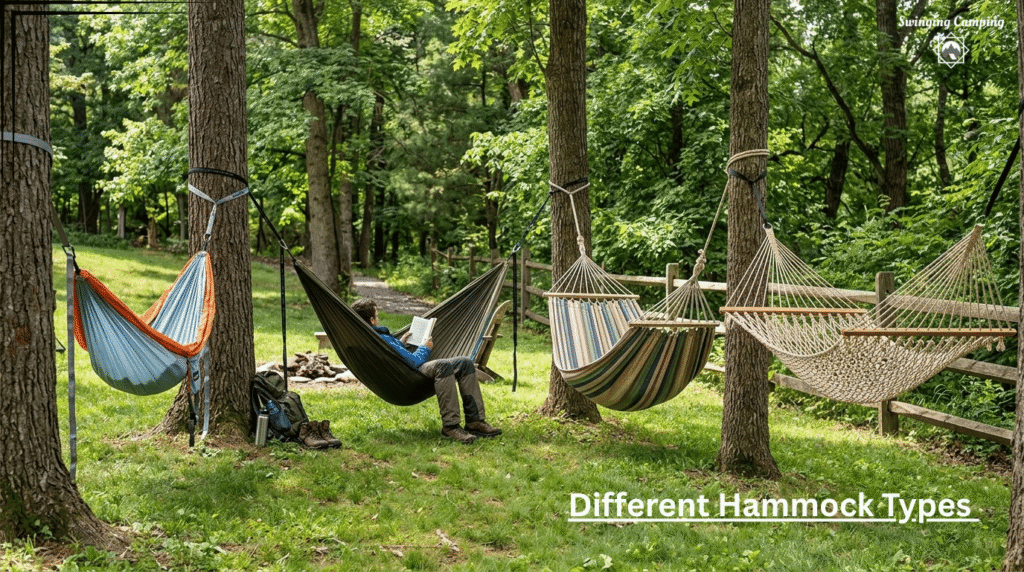
Different Hammock Types and Their Materials
Identify your hammock’s category before grabbing soap and water. As well as determining your comfort level, the material influences the type of cleaning agent you should choose and the way you should dry the garment.
Rope Hammocks: Traditional Outdoor Design
There is no better way to relax outdoors than with a rope hammock. Its breathable design is attributed to the braided or twisted rope used, which is usually cotton, polyester, or a combination of both.
Air is allowed to circulate through the gaps between the ropes, allowing you to remain cool during hot weather. They’re great for those who like the traditional look and feel of a hammock, and they’re durable.
Fabric Hammocks: Comfort and Care
Hammocks made of fabric, such as cotton, polyester, and nylon, are extremely popular due to their comfort and versatility. With this type of hammock, you are provided with complete coverage and support, which allows for even weight distribution and the reduction of pressure points.
You’ll love fabric hammocks if you plan to relax in them for a long time or want an enclosed atmosphere
Camping Hammocks: Lightweight Outdoor Use
The lightweight, easy-to-set-up, and portability of camping hammocks make them a great gear choice for outdoor adventurers. The fabrics used for these hammocks are usually nylon, polyester, or parachute fabric, which are durable and light enough to carry on hiking trips or camping trips.
Cleaning a hammock: Complete Step-by-Step Guide
Step 1: Check the Hammock and Prepare It
Start by removing the hammock from its stand or hooks. Check the care label for specific washing instructions, especially for camping hammocks. Remove any carabiners, straps, or other hardware to prevent damage to the washer or hammock.
Step 2: Remove Loose Dirt and Debris
Step 3: Rinse the Hammock
Use a garden hose or bucket of clean water to thoroughly soak the hammock. This helps loosen dirt, grime, and other debris before scrubbing.
Step 4: Prepare a Mild Cleaning Solution
Mix warm water with a mild detergent. For camping hammocks, use a small amount of mild detergent and avoid fabric softeners, as they can break down the material’s water-resistant coating.
Step 5: Gently Scrub the Hammock
Use a soft-bristled brush or sponge to clean the fabric or ropes. Move section by section to make sure all areas are cleaned, paying extra attention to stained or discolored areas and spots where grime is more likely to accumulate.
Avoid scrubbing too hard, as this can fray rope fibers over time.
Step 6: Consider Handwashing When Needed
For camping hammocks that are not being machine washed, soak the hammock in a tub of cold water with a splash of detergent. Swish it around and gently rub the fabric to clean dirty areas.
Step 7: Machine Wash Compatible Camping Hammocks
If the care label allows machine washing, use a gentle cycle with cold water and a small amount of mild detergent. Make sure all carabiners, straps, and other hardware have been removed first.
Step 8: Rinse Thoroughly
Rinse the hammock thoroughly with clean water to remove all soap and detergent residue. Leaving detergent behind can attract more dirt or irritate your skin during use.
Step 9: Remove Excess Water Carefully
For rope hammocks, gently squeeze out excess water without twisting the ropes, as twisting can cause stretching. Avoid rough handling that could damage the fibers or fabric.
Step 10: Air Dry Completely
Lay the hammock flat in the sun or hang it loosely in an airy or well-ventilated area. For camping hammocks, shaded drying is preferable because direct sunlight can degrade the material over time.
Step 11: Avoid High Heat
Avoid using a dryer unless the manufacturer’s care instructions specifically allow it. Heat can shrink or damage some hammock materials.
Step 12: Inspect Before Storing or Using
Make sure the hammock is completely dry before storing or using it again. Proper drying helps prevent mold or mildew and keeps the hammock fresh.
Step 13: Store It Properly
Once completely dry, store the clean hammock in a clean, dry place. Regular cleaning and proper storage help keep fabric, rope, and camping hammocks strong, comfortable, and ready for use.
Hammock Cleaning: How Often Should You Do It?
A hammock’s cleaning frequency depends on how often it is used and what conditions it is subjected to.
For those who spend a lot of time lounging in it every day or during a particularly dusty season, a light cleaning hammock every few weeks can help maintain its condition. It is generally sufficient to clean hammocks that are used less frequently or in milder conditions once or twice each season.
A lot depends on the weather. Mold or mildew can grow on your hammock if it’s left outside during wet or humid weather. If this happens, cleaning hammock as soon as possible is important to prevent long-term damage. In the same way, if pollen, dirt, or bird droppings get on your hammock, a quick rinse can help keep it looking and feeling good.
If you’re taking your hammock on a trip or camping, wash it after every adventure. In addition to cleaning, this helps it remain ready for your next outing. By keeping your hammock clean, you’ll avoid bigger problems down the road and keep it looking good.
Hammock Care and Maintenance Throughout the Year
Spring Hammock Care: Inspect and Refresh
If you intend to use your hammock during warmer months, it is important that you inspect and clean it thoroughly. You should remove any dirt or debris that has accumulated over the winter.
Whenever you see any signs of rust or wear, replace the suspension system and hardware. You can protect the fabric from the summer sun by spraying it with UV protectant.
Summer Hammock Care: Clean and Protect
In the summer, you have to make sure your hammock is maintained regularly. You should clean your hammock regularly to get rid of sweat, sunscreen, and other residue.
Shade your hammock or cover it to keep it from getting too hot. Whenever you’re going away for a long time, store your hammock indoors to prevent weather damage.
Fall Hammock Care: Prepare for Winter
Winter is just around the corner, so now is a good time to prepare your beloved hammock for the season. Ensure that it has been thoroughly cleaned and any repairs that need to be made are performed.
Protect your hammock from harsh winter conditions by keeping it dry and cool. When using your hammock in the fall, keep it dry and protected from heavy rain and falling leaves.
Winter Hammock Care: Store and Protect
During the cold winters, it is best to store your hammock indoors. Continuing exposure to cold temperatures and moisture may cause the fabric and ropes to deteriorate.
Make sure that your hammock is completely dry before storing it in order to prevent the growth of mold and mildew. Make sure you store the item in a breathable storage bag and keep it in a cool, dry location.
For those who wish to use their hammock throughout the year, you may wish to consider investing in a winter cover that will protect it from harsh weather conditions.
Infographic: Hammock Cleaning
Conclusion: Cleaning a Hammock
Knowing “How to clean a hammock?” Helps keep it fresh, comfortable, and ready for outdoor relaxation. Use the right cleaning method for your hammock type, rinse away all detergent, and let it dry completely before storing it. With regular cleaning, seasonal care, and proper storage, your hammock can stay in great condition for years.
Best Hammocks Comparison Table
|
|
|
|
| |
Product | |||||
Star Rating | 4.9/5
| 4.63/5
| 4.45/5
| 3.57/5
| 4.66/5
|
Bottom Line | A durable, lightweight 2-person hammock with 500-lb capacity and adjustable tree straps, ideal for camping and travel. | A durable, easy-to-set-up hammock with single and double sizes, perfect for camping and travel. | A durable, lightweight 2-person hammock with adjustable tree straps, perfect for camping and outdoor relaxation. | A lightweight, durable double hammock with 500-lb capacity, perfect for camping and outdoor relaxation. | A lightweight, durable nylon hammock with a built-in bug net and adjustable straps, perfect for camping, hiking, and relaxing outdoors. |
Material | Medium | Nylon | Medium | Nylon | Nylon |
Product Dimensions | 106.3"L x 55.1"W | 10"L x 15"W | 106"L x 55"W | 120"L x 78"W | 106"L x 55"W |
Maximum Weight Recommendation | 500 pounds | 400 pounds | 500 pounds | 400 pounds | 500 pounds |
Color | Black & Grey | Blue & Light Blue | Light Grey & Sky Blue | Fuchsia & Sky Blue | A Green/Khahi |

Our Expert Team
Meet our team of outdoor enthusiasts and camping gear researchers! We explore, research, compare, and review outdoor products to help take the guesswork out of choosing the right camping gear. We focus on the important questions about quality, comfort, durability, usability, value, and real-world performance so you can spend less time researching and more time enjoying the outdoors. To learn more about our team and what we do, check out our About Us page.
Why You Should Trust Swinging Camping
At Swinging Camping, we’re passionate about creating better outdoor experiences. Our team carefully researches and tests camping gear to ensure it meets high standards for comfort, safety, and durability.
In addition, we focus on honest, unbiased insights so you can make confident buying decisions. We also value sustainability and aim to recommend products that respect the outdoors we all enjoy.
With years of experience and thousands of happy customers, we work hard to provide reliable advice every time you plan your next adventure.
FAQ About
You can safely remove mold from a hammock by scrubbing it with a soft-brush and a mixture of white vinegar, mild soap, and warm water.
Clean nylon fabric by hand-washing or machine-washing in cool water with a mild, liquid detergent, avoiding hot water, bleach, and fabric softener.
Yes, you can wash an
by using a washing machine on a gentle cycle or by hand washing it
A quality hammock typically lasts between 5 to 15 years, though some well-maintained synthetic or rope models can endure for 20 years or more.
The best way to clean a hammock is to hand wash or machine wash it using cool water and a mild, fragrance-free detergent, depending on its specific material
Vinegar kills mold better than bleach on most household surfaces because it penetrates porous materials to reach the roots, whereas bleach only kills mold on non-porous surfaces and leaves the roots behind on porous ones
When nylon gets wet, it absorbs water because the material is hygroscopic, meaning its molecular structure attracts and holds moistur
Why You Can Trust Our Reviews
Reviews for "Swinging Camping":

How to Hammock Camp With a Dog?
() Learn “How to Hammock Camp With a Dog?” With these simple tips from Swinging Camping. Discover how to prepare

How To Hang a Hammock Using Rope?
() Learn “How To Hang a Hammock Using Rope?” With this easy step-by-step guide from Swinging Camping. Discover how to
How To Tie a Hammock With Straps?
() Learn “How to Tie a Hammock With Straps?” With this simple guide from Swinging Camping. Discover how to choose

How Much Weight Can a Hammock Hold?
() Wondering “How Much Weight Can a Hammock Hold?” This guide from Swinging Camping explains hammock weight limits by style
How Do You Comfortably Camp in a Hammock?
() Learn “How Do You Comfortably Camp in a Hammock?” with this practical guide by Swinging Camping. Discover how to

How To Clean Hammock?
() Learn “How To Clean a Hammock?” with this complete step-by-step guide from Swinging Camping. Discover how to clean rope,
How useful was this post?
Click on a star to rate it!
Average rating / 5. Vote count:
No votes so far! Be the first to rate this post.