
Learn “Where Did Hammocks Originate?” with this history guide from Swinging Camping. Discover their Indigenous American roots and evolution through naval use and space exploration. Explore how hammocks became popular for camping, relaxation, and outdoor living today.
Table of Contents
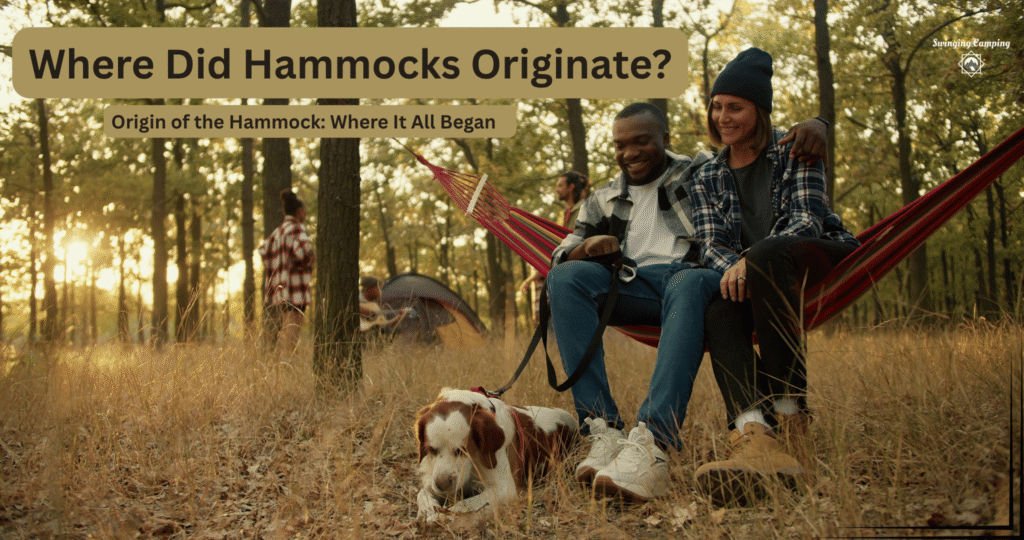
Origin of the Hammock: Where It All Began
Since ancient times, hammocks have been used as shelters and resting places, but how does this work? Who created the first one, and how did they come into existence? I guess it’s time to figure it out.
A hammock’s backstory is pretty cool.
Although hammocks are considered a more modern invention here in North America, they’ve been around for centuries in Central and South American countries like Mexico, Nicaragua, and Brazil.
What made it go from the jungles of South and Central America and beaches of the Caribbean to backyards all over?
Let’s start from scratch.
Where did hammocks originate from?
Hammock Name Origin: From “Hamaca” to Hammock
A hammock, from Spanish hamaca, borrowed from Taíno (an extinct Arawakan language spoken by the Taíno people of the Caribbean) and Arawak (Arawakan language spoken by the Lokono ) hamaka, is a sling made of fabric, rope, or netting, suspended between two or more points, used for swinging, sleeping, or resting.
They were known as “hamacas” by indigenous people.
In the course of their adoption by Europeans, the hammock became what we know today as the hammock
The History and Evolution of Hammocks
A hammock was developed by Native Americans for sleeping, just as an English hammock was developed by the English. Traditionally, it consists of a cloth panel or a woven rope or twine network suspended between two firm anchor points.
How Hammocks Became Part of Naval History?
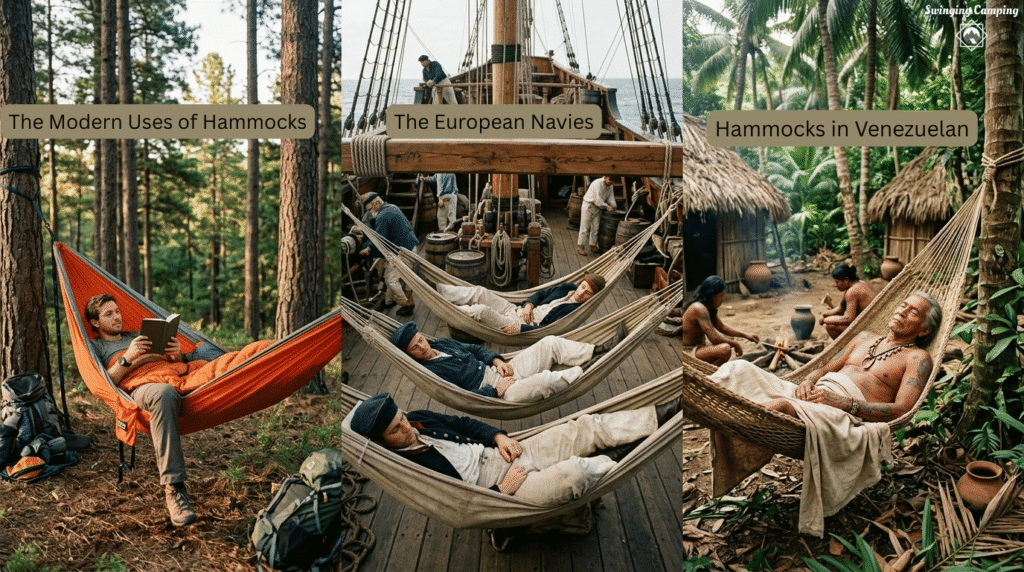
The European Navies
Hammocks were first used by the English and Spanish navies on the deck of ships in the mid-16th century.
This was primarily due to saving space, as well as the fact that the hammocks moved along with the motion of the ship, reducing the risk of sailors being thrown to the floor during rough seas.
European Hammocks vs. American Hammocks
European hammocks, however, were not intended as comfort-focused as hammocks from South or Central America.
In Europe, naval hammocks were typically constructed from heavy canvas and did not provide as much ventilation as those in South and Central America.
Hammocks in Military History
It has been said that sailors, both in Europe and United States, slept on hammocks for three centuries. This was during World War I, World War II, the American Civil War, and the Vietnam War.
Hammocks beyond Naval Ships
It was in the late 19th century that British prisons began replacing beds with hammocks in order to save space and lower costs.
As for the hammock in the United States, it was eventually adopted by farmers as an affordable sleeping solution as well as by wealthy families for their leisure activities.
Hammocks in the Early 20th Century
In the early 1920s, hammocks were being used by parents to contain babies who were just learning to crawl on ships, by explorers and soldiers traveling in remote regions, and then eventually by sailors aboard ships.
Hammocks in Space
One of the most surprising uses of hammocks came during the Apollo missions in the 1960s. After the Apollo 11 moon landing in 1969, astronauts struggled to sleep comfortably on the spacecraft floor and engine cover.
By Apollo 12, NASA introduced lightweight moon hammocks with blankets, hammock insulators, and Velcro attachment points, giving astronauts a more comfortable place to rest.
Hammocks in Venezuelan
Venezuelan villages raised their families in hammocks. Researchers, adventurers, geologists, and other non-native visitors to Central and South American jungles adopted the Venezuelan hammock design as a protection against scorpions and venomous snakes during the first half of the 20th century.
As a result of the difficult jungle environments encountered by Western explorers in South America, the Venezuelan hammock was developed for use in other tropical climates.
The Modern Uses of Hammocks
In today’s society, hammocks are used primarily for leisure and relaxation, and have become especially popular among the millennial generation since they are a comfortable, convenient, and portable product.
The hammock has become one of the most popular ways to relax outdoors, but thanks to its incredibly versatile nature, it can also be used in a number of unexpected ways.
Check out these ways to use your hammock.
Hammocks for Camping
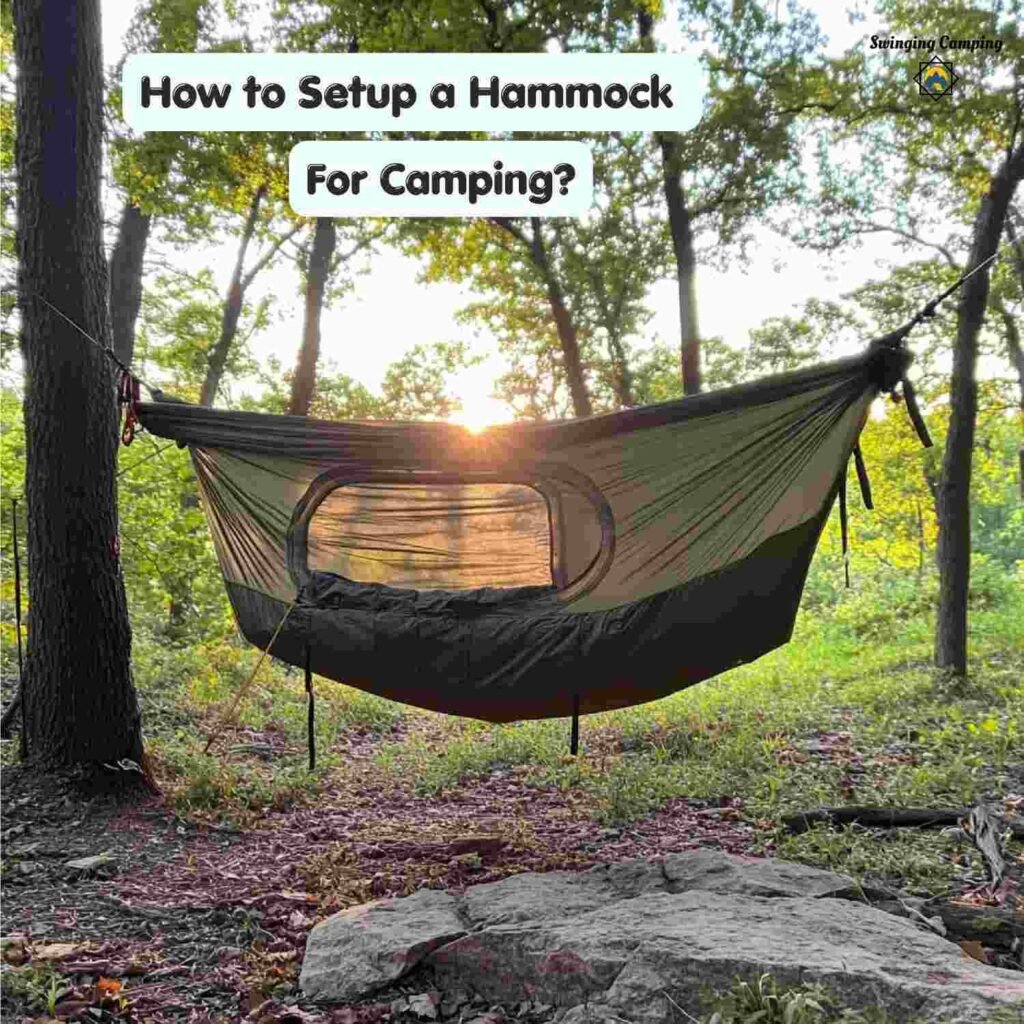
In recent years, hammock camping has become an increasingly popular alternative to tent camping. There are many benefits to sleeping in a hammock, including the fact that it is more comfortable and convenient than sleeping on the ground.
There’s no need to worry about space in your backpack when you pack a hammock. They fit in any bag without taking up much room. Also, they can be set up anywhere, no matter the elevation or ground condition.
Hammock for Post-Workout Relaxation
There are times when you need to take a short break and recover from a strenuous workout that you have done at home in your gym.
Try setting up a hammock in your workout room so that once you’ve finished working out, you can relax and allow your muscles to recover. This is a more relaxing alternative to retreating to the couch.
Hammocks for Guest Sleeping
It should be noted that hammocks are not only a comfortable and relaxing way to sleep, but can also be just as practical as any other bed. Rather than spending a lot of money on a new bed and trying to fit it into your guest bedroom, why not provide your guests with a hammock to sleep in?
You can create the perfect sleeping oasis for your guests with a cozy blanket, some cushions, and sturdy support straps.
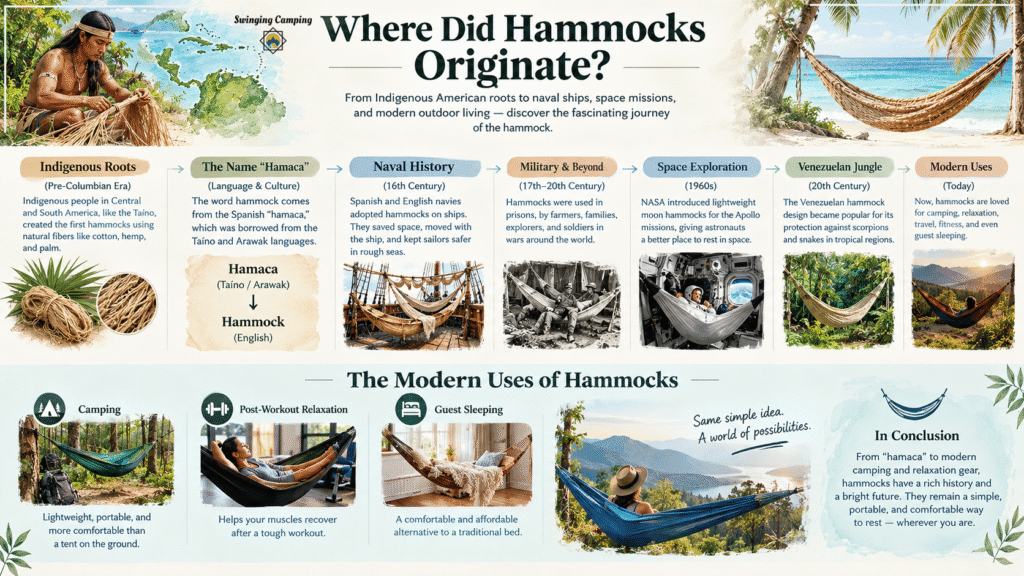
Infographic: Origin of Hammock
Conclusion: Where did hammocks originate
Hammocks have a fascinating history that began in the Americas and evolved through centuries of use by Indigenous people, sailors, explorers, soldiers, and families.
From “hamaca” to modern camping and relaxation gear, the hammock has adapted too many needs. Today, hammocks remain a simple, portable, and comfortable way to rest outdoors.
Best Hammocks Comparison Table
|
|
|
|
| |
Product | |||||
Star Rating | 4.9/5
| 4.63/5
| 4.45/5
| 3.57/5
| 4.66/5
|
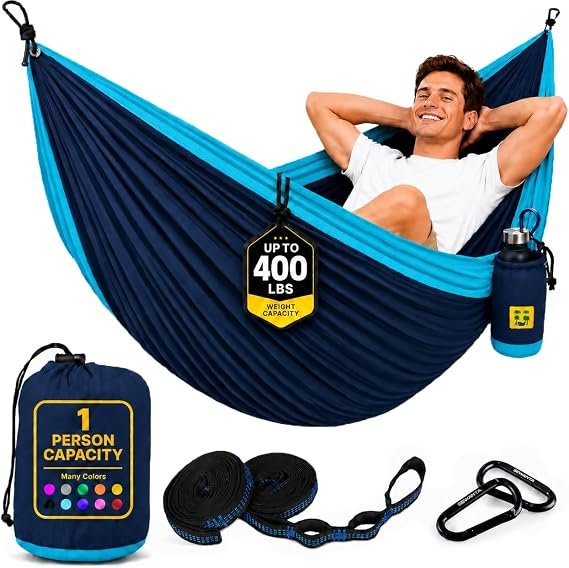
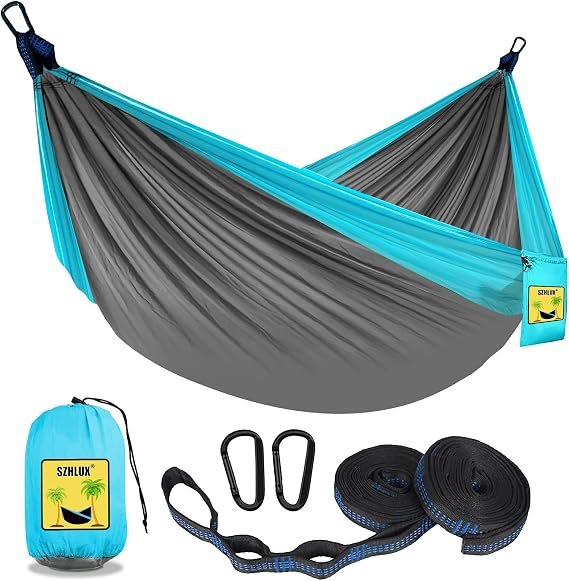
Bottom Line | A durable, lightweight 2-person hammock with 500-lb capacity and adjustable tree straps, ideal for camping and travel. | A durable, easy-to-set-up hammock with single and double sizes, perfect for camping and travel. | A durable, lightweight 2-person hammock with adjustable tree straps, perfect for camping and outdoor relaxation. | A lightweight, durable double hammock with 500-lb capacity, perfect for camping and outdoor relaxation. | A lightweight, durable nylon hammock with a built-in bug net and adjustable straps, perfect for camping, hiking, and relaxing outdoors. |
Material | Medium | Nylon | Medium | Nylon | Nylon |
Product Dimensions | 106.3"L x 55.1"W | 10"L x 15"W | 106"L x 55"W | 120"L x 78"W | 106"L x 55"W |
Maximum Weight Recommendation | 500 pounds | 400 pounds | 500 pounds | 400 pounds | 500 pounds |
Color | Black & Grey | Blue & Light Blue | Light Grey & Sky Blue | Fuchsia & Sky Blue | A Green/Khahi |

Our Expert Team
Meet our team of outdoor enthusiasts and camping gear researchers! We explore, research, compare, and review outdoor products to help take the guesswork out of choosing the right camping gear. We focus on the important questions about quality, comfort, durability, usability, value, and real-world performance so you can spend less time researching and more time enjoying the outdoors. To learn more about our team and what we do, check out our About Us page.
Why You Should Trust Swinging Camping
At Swinging Camping, we’re passionate about creating better outdoor experiences. Our team carefully researches and tests camping gear to ensure it meets high standards for comfort, safety, and durability.
In addition, we focus on honest, unbiased insights so you can make confident buying decisions. We also value sustainability and aim to recommend products that respect the outdoors we all enjoy.
With years of experience and thousands of happy customers, we work hard to provide reliable advice every time you plan your next adventure.
FAQ About
Sailors stopped using hammocks because modern, larger steel ships became more stable and offered more room, allowing navies to install fixed, stackable bunks that improved crew comfort and health.
People in parts of Mexico, especially in the hot and humid Yucatán Peninsula, sleep in hammocks (hamacas) because they provide superior airflow and keep the body cool through hot tropical nights
The word "hammock" comes from the Spanish word hamaca, which was borrowed from the Taíno language of the Caribbean
There is no definitive proof that sleeping in a hammock is healthier than sleeping in a bed, as long-term scientific research on full-time hammock sleeping is highly limited. While some small-scale studies and many enthusiastic users suggest potential sleep and physical benefits, the evidence is largely anecdotal.
Hammocks originated with the indigenous peoples of Central America, South America, and the Caribbean roughly 1,000 years ago.
Why You Can Trust Our Reviews
Reviews for "Swinging Camping":

How to Hammock Camp With a Dog?
() Learn “How to Hammock Camp With a Dog?” With these simple tips from Swinging Camping. Discover how to prepare
How To Hang a Hammock Using Rope?
() Learn “How To Hang a Hammock Using Rope?” With this easy step-by-step guide from Swinging Camping. Discover how to
How To Tie a Hammock With Straps?
() Learn “How to Tie a Hammock With Straps?” With this simple guide from Swinging Camping. Discover how to choose

How Much Weight Can a Hammock Hold?
() Wondering “How Much Weight Can a Hammock Hold?” This guide from Swinging Camping explains hammock weight limits by style
How Do You Comfortably Camp in a Hammock?
() Learn “How Do You Comfortably Camp in a Hammock?” with this practical guide by Swinging Camping. Discover how to

How To Clean Hammock?
() Learn “How To Clean a Hammock?” with this complete step-by-step guide from Swinging Camping. Discover how to clean rope,
How useful was this post?
Click on a star to rate it!
Average rating / 5. Vote count:
No votes so far! Be the first to rate this post.